Showing posts with label african reading challenge. Show all posts

Monday, September 1, 2008

BOOK: The Plague by Albert Camus

The Plague by Albert Camus

African Reading Challenge: Algeria; 1% Well Read

What are my impressions after reading this book? It's a classic, so that comes with a bunch of preconceived notions for me, which is layers, messages, and deep. Usually I don't like classics because they are deep, with hidden messages and layers. For some reason though, I kind of like Camus.

Camus tells a story about a town in Algeria, Oran which becomes infested and then isolated, with the bubonic plague. There are a bunch of characters that I had a hard time keeping straight, so they each probably represent a different philosophy. At some point, I thought that there must be some analogy to world war two, and my reading after confirmed this inkling. The German invasion and occupation of France is the parallel. What makes Camus an interesting read for me is that the plot and story at its lowest level is still interesting, but I can recognize and still even enjoy the other level. The characters are facing difficult situations all in their own way and there are philosophical discussions going on that I somewhat skim over.

The Plague tells a great story and has levels for some readers who like that stuff. Camus is a Nobel Winning author who writes in a very accessible style.

Isn't that an awful cover I have? I bought this at a used book sale, but it just screams Important Book!

Sunday, July 27, 2008

BOOK: Things Fall Apart by Chinua Achebe

Things Fall Apart by Chinua Achebe

African Reading Challenge; Orbis Terrarum: Nigeria; 1% Well Read Challenge; decades challenge: 1950s

I've been wanting to read this book for a long time, so I kept putting it on another challenge list, hoping to finally get around to it. It gets scary when one book is on so many challenges, because what if I don't like it? I finally read it, appropriately enough during a wonderful heat spell, helping me get into the mood for a story set in 1890s Nigeria, in the African jungle. It took a while to get into the style of the writing but once I did I felt rewarded with a wonderful look at life in an African village.

The story follows Okonkwo, a leader and warrior in his local village, and his family. For the first third, the plot is just explaining the family and the lifestyle and sets up the pivotal point in the story. This is also about the influx of the British and the effect of the Christian missionaries on the tribes. Achebe does a great job of using a small family and village to see how the clashes occurred between the two groups which sets up the colonial situation in Africa which still has repercussions today. By the time the ending came with the inevitable showdown, I felt so bad for how the situation had deteriorated. As usual, there were good people on both sides but they were never enough.

Okonkwo was a flawed character to focus the book on. Even within his village, he was aggressive and violent and impatient with people he determined were less than him. I found it hard to like him and yet he was determined and smart and a leader. Even though life in the village of Umuofia was so far removed from my own, it helped to show me how that culture conflicted so much with the British who arrived. There is another novel, No Longer At Ease that I will have to look into that follows one of Okonkwo's descendants. I am going to look for it because this was a very good book and I would like to read another one of Achebe's African novels.

Saturday, June 21, 2008

BOOK: A Long Way Gone by Ishmael Beah

A Long Way Gone: memoirs of boy soldier by Ishmael Beah

African Reading Challenge: Sierra Leone; in their shoes; notable books challenge

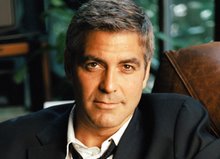
I wanted to make sure that the author's picture was included with this review. His beautiful smile makes such a contrast to the life he has led. I remember seeing Beah on The Daily Show last year and wanting to read his memoirs of his life in Sierra Leone. However, the similarities between this book and The Cellist of Sarajevo are making me crave a much lighter book. Each of these books has been excellent, and worth while and I would recommend them, but the whole civil war with civilians in the crossfire while nobody does anything is beginning to make me ill. The idea that a group can decide it's alright to kill everyone is just so unfair. Where does all this hate come from?

Beah starts the book as an eleven year old interested in rap, walking to his buddy's house with some friends. The rebels start attacking and this group of young boys end up living in the woods, trying to survive. They can't go home and there is no where else for them to go. Villagers are scared of them, the rebels and the army are all trying to kill them. Eventually they end up recruited and saved by the army, but with a price: they are now soldiers. I imagine he glosses over the worst of the atrocities, but there are still terrible descriptions of killing in this book. Just when I wasn't sure if I could read any more, UNICEF and some NGO's step in and get the boy soldiers to rehabilitation camps. Beah tells his story up to his escape from Sierra Leone to the United States.

I'm glad I read this book, I am glad that the UN is working to save these boys, I am glad that Beah survived and has written this book about his amazing life.

Saturday, May 24, 2008

BOOK: The Kalahari Typing School for Men by Alexander McCall Smith

The Kalahari Typing School for Men by Alexander McCall Smith

African Reading Challenge: Botswana; series challenge

Book four starring Mma Precious Ramotswe and all is well. She is still engaged to Mr J.L.B. Matekoni, and although a wedding date does not seem imminent, Mma seems happy. Not much happens in these books but a lovely philosophy of life, a respect of the old ways, and the usual human conditions of adultery, theft, and competition that are complicating life. Precious deals with the people around her in her indomitable yet quiet style. Bush tea is drunk and the standards of society are respected. I haven't read this series in quite a while and I am glad to have re found these books.

Stephanie Nolan's book, 28 Stories of AIDS in Africa, explained how AIDS is not named, just called that illness. I was wondering if AIDS would be a part of the story, because with infection rates as high as they are, it would have to in order for the setting to be realistic. Sure enough, this book included that habit, as well as grandmothers raising their grand babies because the adults have died.

Tuesday, May 20, 2008

BOOK: In the Country of Men by Hisham Matar

In the Country of Men by Hisham Matar

Man Booker challenge (shortlist 2006); African Reading challenge (Libya); Orbis Terrarum challenge; notable book challenge

I usually try not to use the same book for too many challenges, but this one took me so long to read I am going to use it where ever I can. It is a well lauded book; the cover lists all sorts of important awards it was nominated for, but it just didn't resonate with me.


Suleiman narrates his story from his nine year old point of view, which is accurate if you think that nine year olds don't really know what is going on, so neither does the reader. His father is away on business, his mother is 'ill' and requires lots of medicine from the pharmacy. Poor Suleiman can only relate from his perspective, but it left me feeling as confused as a nine year old. The writing was good in that sense. There is also a revolution going on in 1979 Libya, and people are disappearing. Is his father going to be next? Did his father betray they neighbour? There is some Oedipal stuff going on with the love for his mother, and he is trying to be a man but he is simply a kid.

I just didn't get it mostly, but I didn't dislike it. It was one of those books where I know there is more going on, but I couldn't see it. It might make a better discussion book, or if it had Spark notes to go with it so I could read about the symbolism and themes. I don't claim to be very good at seeing the levels in a book. It's so, literary. And lots of people like that in their books, so I don't want to put any one off, but it wasn't enough of a page turner for me. I liked the view of Libya and seeing what life was like in that African country.

If you have also reviewed this book, leave me a link in the comments, so others can see another point of view.

Wednesday, May 14, 2008

BOOK: 28 Stories of AIDS in Africa by Stephanie Nolen

28 Stories of AIDS in Africa by Stephanie Nolen

Nonfiction 5 challenge, African Reading Challenge

Twenty eight stories, one for every million people living with HIV/AIDS. Nolen's book has certainly raised my awareness of the disaster in Africa and how it could have been prevented or, at the very least, lessened with quicker action, and more concern and money.

Each chapter looks at a different person, a different country, a different aspect of the crisis. From the orphans to the grandparents to the activists to the prostitutes. From the civil war, to the lack of help, to the pharmaceutical companies and the generic drugs, to the lack of research into the aspects of AIDS that affects Africans more, your heart will be broken twenty eight times. Time and again, the shame and denial that we see here in North America prevented people in Africa from getting the timely help they needed, for the few where health care and ARVs are available. Awareness and help are needed now.

In the words of Nelson Mandela: In the face of the grave threat posed by HIV/AIDS, we have to rise above our differences and combine our efforts to save our people. History will judge us harshly if we fail to do so now, and right now.

Nolen's passion for the continent and the people comes through, and her method of putting a human face on each issues she tackles makes this book a great read. Disturbing, and upsetting, and frustrating, but a great read.

Tuesday, April 29, 2008

CHALLENGE: African Reading Challenge

African Reading Challenge
Participants commit to read - in the course of 2008 - six books that either were written by African writers, take place in Africa, or deal significantly with Africans and African issues. (Read more if you like!)

You can read whatever you want, but of the six books, I recommend a mixture of genres. For example, you might select books from each of the following:

Fiction (novels, short stories, poetry, drama)
Memoir / autobiography
History and current events

Already read in 2008:
This Blinding Absence of Light by BenJalloun (Morocco)
Life and Times of Michael K by JM Coetzee (South Africa)

1. 28 Stories of AIDS in Africa by Stephanie Nolen
2. The Plague by Albert Camus (Algeria)
3. In the Country of Men by Hisham Matar (Libya)
4. The Kalahari Typing School for Men by Alexander McCall Smith (Botswana)
5. A Long Way Gone by Ishmael Beah (Sierra Leone)
6. Things Fall Apart by Chinua Achebe (Nigeria)
7. The Camel Bookmobile by Masha Hamilton (Kenya)